The 4 Postures: A Framework for Culture-Bending Organizations

I've been part of building a handful of purpose-driven ventures over the years. Some only lasted a year, while others spanned decades. Each of them was designed to have a positive social impact. I’ve also had the privilege of walking alongside hundreds of visionary leaders in their journey to start or grow their own positive-impact organizations.
And, in every single venture, whether my own or someone else's, there are times when the values of the organization and the actions of the organization don’t line up. Sometimes these were planned and thoughtful compromises made to keep the vision alive. At other times, a moment of crisis forced an incongruity.
When building a virtuous venture, we face a persistent challenge: ensuring that what our organization stands for aligns with how it actually operates. In a perfect world, this means complete consistency between our beliefs and behaviors. But we don’t live in a perfect world.
I’ve learned that it's way easier to be thoughtful than to be consistent. The 4 Postures framework acts as a prompt for thoughtfulness and to identify potential inconsistencies in how you think and how you act.
THE NARRATIVE LANDSCAPE
As a starting point for aligning values with expressions, it's important to name the narrative you are designing. There are three basic types:
Dominant Narratives are the uncontested way things are thought about and acted upon. They're just the way it is. These are the default settings of culture and are often so pervasive that we don't even notice them. In business, dominant narratives include ideas such as "growth at all costs," "move fast and break things," and "the customer is always right."
Juxtaposed to the dominant narratives are two alternative narrative types: Counter Narratives and Culture-Bending Narratives.
Counter-narratives push back against the dominant narrative and challenge prevalent thinking. They operate in a "this vs. that" paradigm. If the dominant narrative says "consume," the counter-narrative says "consume consciously and ethically." If the dominant narrative celebrates "scale, speed, and progress," the counter-narrative emphasizes "environmental and social impact."
Counter-narratives are helpful because they push back against negative dominant narratives and old ways of thinking. However, counter-narratives are often defined more by what they're against than what they're for.
Culture-Bending Narratives offer something “other.” They provide a hopeful alternative that transcends the binary of dominant versus counter. Instead of pushing back on the dominant narrative directly, the culture-bending narrative tends to offer something entirely different. Something, perhaps, transcendent.
For example, the dominant narrative of American consumer culture says: “get what you want, when you want it, with as little friction as possible.” It’s the convenience of Amazon Prime, DoorDash, or one-click everything.
The counter-narrative responds with "shop local" and "support small businesses" (As an aside, my wife and I own a small bookstore. Please shop local.) And even though shopping locally is often less convenient, it does give you a sense of community and supports the local economy in a much more robust way than shopping at big online retailers.
But a culture-bending narrative might invite you to something deeper, like restraint. This restraint isn’t about depriving yourself; it's about freeing yourself from consuming. This narrative might encourage you to mend a hole in your jeans instead of buying a new pair, borrow a book from the library instead of buying one, or perhaps join a food co-op or grow a garden. It’s less about where you shop and more about questioning the need to shop at all.
A FRAMEWORK: THE 4 POSTURES
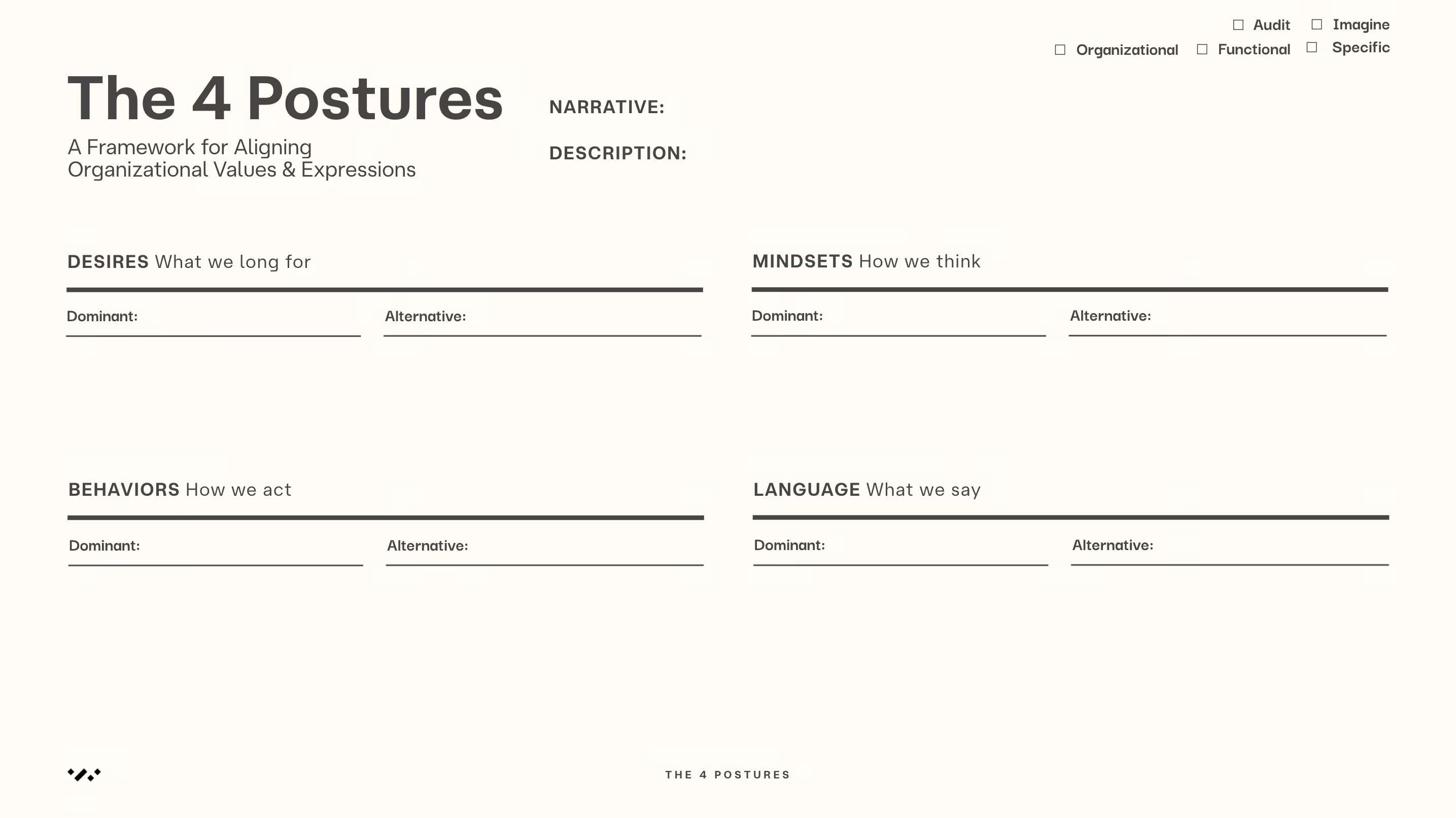
The 4 Postures Framework works best when operating in one of the alternative narratives outlined above. It serves as a way to document the narrative and then apply what that would look like across four dimensions of organizational life:
- Desires: What you long for
- Mindsets: How you think
- Behaviors: How you act
- Language: What you say
For each of these dimensions, you will identify both the dominant expression of the dimension and the alternative posture you're choosing.
The framework is not designed to give you answers but instead to reveal tensions in your values and how you might express them. Where you're consistent, where you're compromising, where you're perpetuating the expressions of narratives you claim to reject.
Use this as either an audit of your current situation or as an imaginary for operating in new ways.
THREE LAYERS OF APPLICATION
Use the 4 Postures framework across three different layers:
- Organizational: A bird’s-eye view of the entire organization
- Functional: A closer evaluation of how each team or department operates
- Specific: A particular expression (product, campaign, initiative, etc.)
The framework can reveal inconsistencies within a particular layer or, when viewed together, across all the layers
Organizational Level
This is the stress test for your entire operation. At the most abstract level, are you aligned?
Imagine a start-up that deeply desires to place "people over profits." Now, imagine if their employees were expected to be available on Slack around the clock. Or, if their only KPI was profit growth. Well, while the stated value might center on people, the behaviors align more with a dominant narrative of “always on” and “shareholder value.”
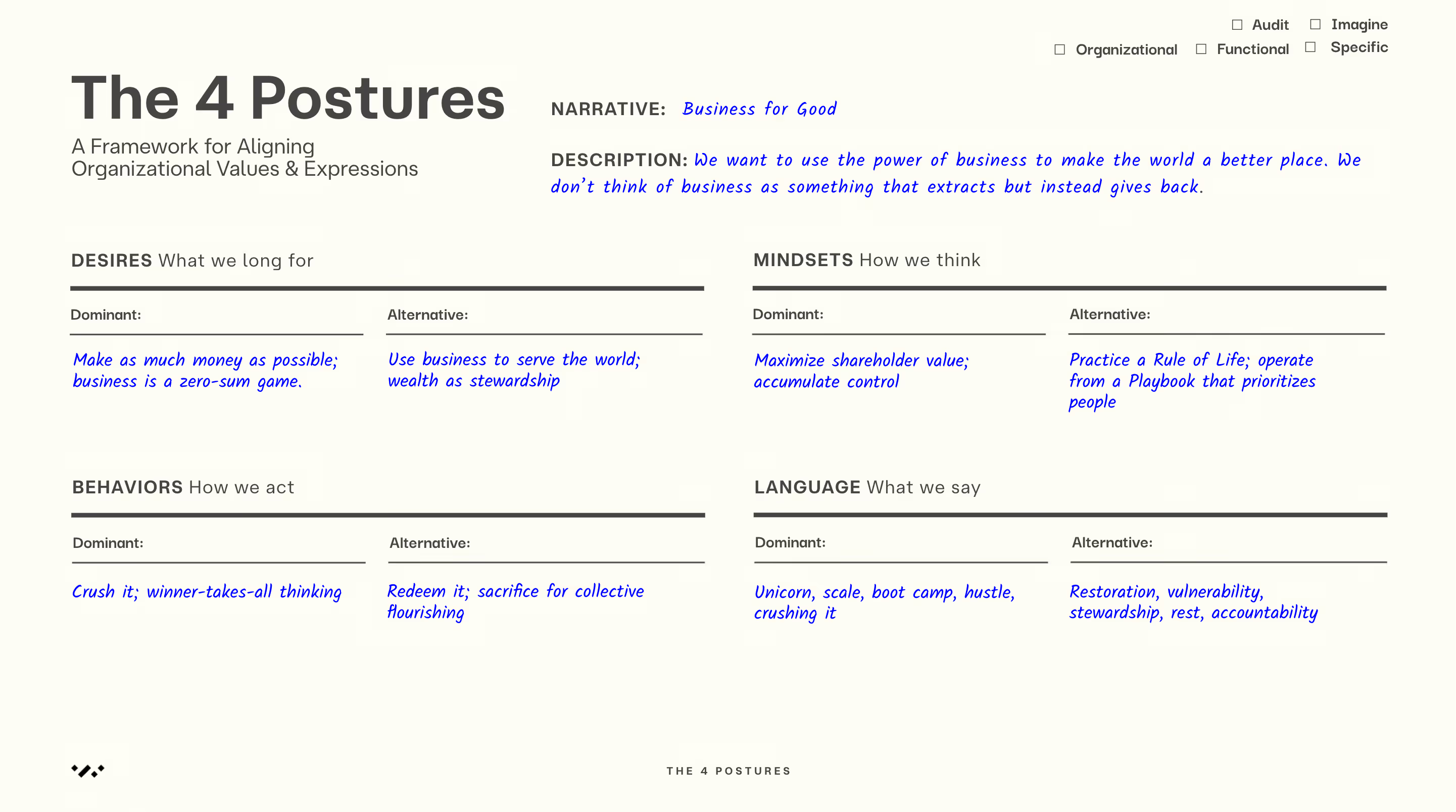
Let’s use the framework as a tool to shape our imagination. So, in this example, we are mapping how the startup might think about their whole organization.
Narrative: Business for Good
Description: We want to use the power of business to make the world a better place. We don’t think of business as something that extracts maximum shareholder value, but rather as something that gives back.
Desires
- Dominant: Make as much money as possible; business is a zero-sum game
- Alternative: Use business to serve the world; wealth as stewardship
Mindsets
- Dominant: Crush it; winner-takes-all thinking
- Alternative: Serve it; sacrifice for collective flourishing
Behaviors
- Dominant: Maximize shareholder value; accumulate control
- Alternative: Operate from a Playbook that prioritizes people
Language
- Dominant: Unicorn, scale, boot camp, hustle, crushing it
- Alternative: Healing, vulnerability, stewardship, rest, accountability
As this example startup grows, they might return to the framework and use it as an audit.
You might genuinely desire to serve the world. But if your Slack channel is full of "let's crush this quarter" and "10x growth," there's a disconnect. The language of conquest—of crushing and dominating—fundamentally contradicts the posture of service, which requires humility, sacrifice, and putting others first.
You might talk beautifully about vulnerability while your actual behaviors optimize for control. You might talk about the need for rest while inadvertently celebrating overworking.
Once done, you might apply this at a more functional level to ensure that, for example, your HR practices align with the organization's goals and values.
Functional Level
This is where you examine specific teams. What narrative is your marketing department, HR team, or accounting team living into? What about your sales process or customer service approach?
Here's an example of how a marketing team's 4 Postures might map for alignment:
Headline: Purposeful Marketing Team
Desires
- Dominant: Generate leads and conversions at any cost
- Alternative: Build genuine relationships that serve people first
Mindsets
- Dominant: Marketing is persuasion; optimize for clicks
- Alternative: Marketing is service; optimize for trust
Behaviors
- Dominant: A/B test emotional triggers, retarget aggressively, maximize ad spend
- Alternative: Create useful content, respond personally, invest in community
Language
- Dominant: Funnel, conversion, capture, target audience
- Alternative: Invitation, connection, serve, community members

Specific Initiative Level
This is where you assess a particular campaign or offering.
Let's say you're launching a product to support new mothers. Your language is all about "empowerment" and "supporting the journey of motherhood." Beautiful.
But what if you require a subscription model designed to extract maximum lifetime value? What if your imagery only shows certain economic contexts or certain family structures?
You're using the language of inclusion while perpetuating dominant narratives of exclusion.
The 4 Postures framework forces the question: what are you actually building here?
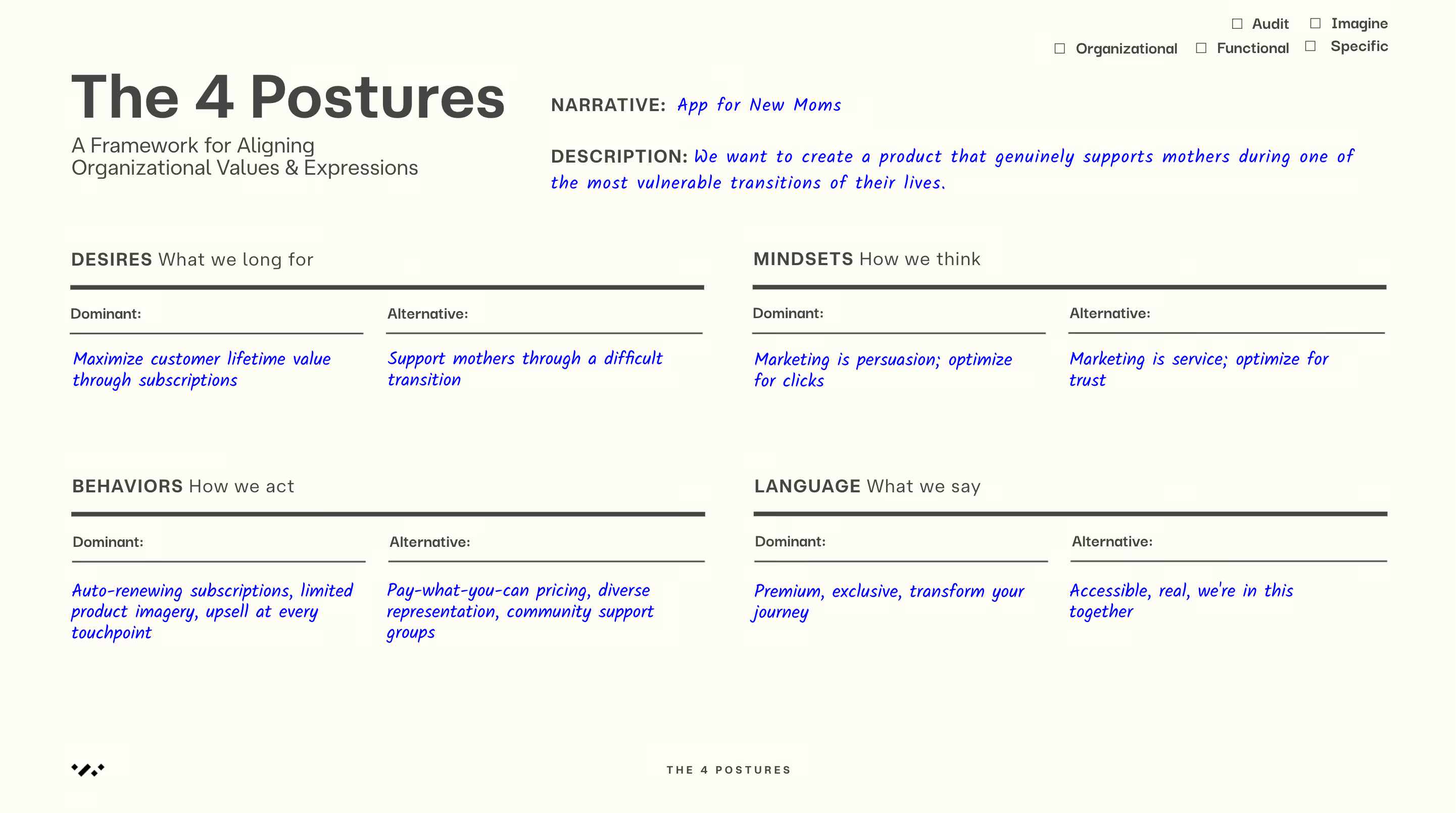
Here's how the new mother's product 4 Postures might map for alignment:
Headline: App for Supporting New Moms
Description: We want to create a product that genuinely supports mothers during one of the most vulnerable transitions of their lives.
Desires
- Dominant: Maximize customer lifetime value through subscriptions
- Alternative: Support mothers through a difficult transition
Mindsets
- Dominant: Mothers are a market segment to monetize
- Alternative: Mothers need support, not another thing to buy
Behaviors
- Dominant: Auto-renewing subscriptions, limited product imagery, upsell at every touchpoint
- Alternative: Pay-what-you-can pricing, diverse representation, community support groups
Language
- Dominant: Premium, exclusive, transform your journey
- Alternative: Accessible, real, we're in this together
HOW TO USE THIS FRAMEWORK
Step 1: Clarify your scope
What are you mapping: Your entire organization, a specific function within the organization, or a particular initiative?
What are you auditing: Your current situation or are you imagining a new one?
Name the narrative: What is the narrative you are living in or wanting to create?
Step 2: Map the dominant narrative
For each of the four dimensions—desires, mindsets, behaviors, language—identify what the dominant narrative looks like within that expression
- What do most people in your industry long for?
- How do they think about their work?
- What do they actually do day-to-day?
- What words do they use?
Step 3: Articulate your alternative
As an imaginative exercise, what would you build if you weren't constrained by the dominant narrative?
- What could we long for instead?
- How could we think differently?
- What could we do that would reflect those thoughts and desires?
- What language would give voice to this alternative?
As an audit or introspection tool, what is actually happening either intentionally or unintentionally?
- What desires do we have?
- What mindsets did we adopt?
- What behaviors are we practicing?
- What language do we speak?
Step 4: Talk it out
Use the framework as a conversation starter with your team. Look for gaps in the thinking, ways to improve, or as simple acknowledgement of where you are.
Some inconsistencies might be necessary compromises—at least for now. That's okay, but name it.
Return to the framework and use it as a way to constantly evaluate, dream and re-evaluate.
—
Every organization makes narrative claims that actively shape reality. Your choices about desires, mindsets, behaviors, and language either reinforce existing narratives or bend culture toward new possibilities.
On it’s own, The 4 Postures won't solve anything, but it will help you see more clearly. And with clarity you can start to make the needed changes.
—

The Heart of Whiteboard Has a Seat at the Table
Whiteboard Joins RKD Group