The Future Belongs to the Embodied
In 2016, Taylor and I wrote something that has stayed with us for a decade.
“The irony in our work is that we really don’t want people to get lost in a digital world, but look up to the wonder of the world in front of us.”
Ten years later, that tension has only intensified.
The average adult in the United States now spends more than seven hours per day interacting with screens across devices. Globally, average daily screen time ranges from 6 to 7 hours, depending on the study and region. Among teenagers, the numbers are often higher. Recent CDC data shows that nearly half of American teens report spending four or more hours per day on screens outside of schoolwork. Those with the highest levels of screen time are significantly more likely to report symptoms of anxiety and depression.
At the same time, research continues to show that face-to-face interaction is more strongly associated with positive mental health outcomes than digital communication alone. During the pandemic, when in-person contact dropped and digital contact increased, studies found that physical presence was more predictive of well-being than messages or video calls. Digital tools helped, but they did not fully replace embodied connection.
This is the paradox of our age. We have never been more connected, and we have never felt more alone.
As builders of digital platforms and brand systems, we have to sit inside that tension honestly. Screens are not neutral. Platforms shape behavior. Repetition shapes belief. Attention shapes formation.
Every click represents a human moment. Every scroll represents time that will never be returned. When we speak about engagement, we are speaking about slices of a finite life.
That reality reframes our responsibility.
It would be easy to respond with cynicism. It would be easy to declare technology the villain and retreat from it. It would be easy to chase growth without asking deeper questions about consequences.
We choose a different path.
We believe technology can serve human flourishing when it is rightly ordered. We believe digital systems can strengthen communities rather than fragment them. We believe brands can clarify purpose rather than distort identity. We believe platforms can direct people back toward embodied life rather than pulling them away from it.
The irony remains. We work in pixels and code. We operate in feeds and algorithms. We design experiences meant to be encountered on screens. Yet our deepest hope is that the result of that work strengthens what happens off-screen.
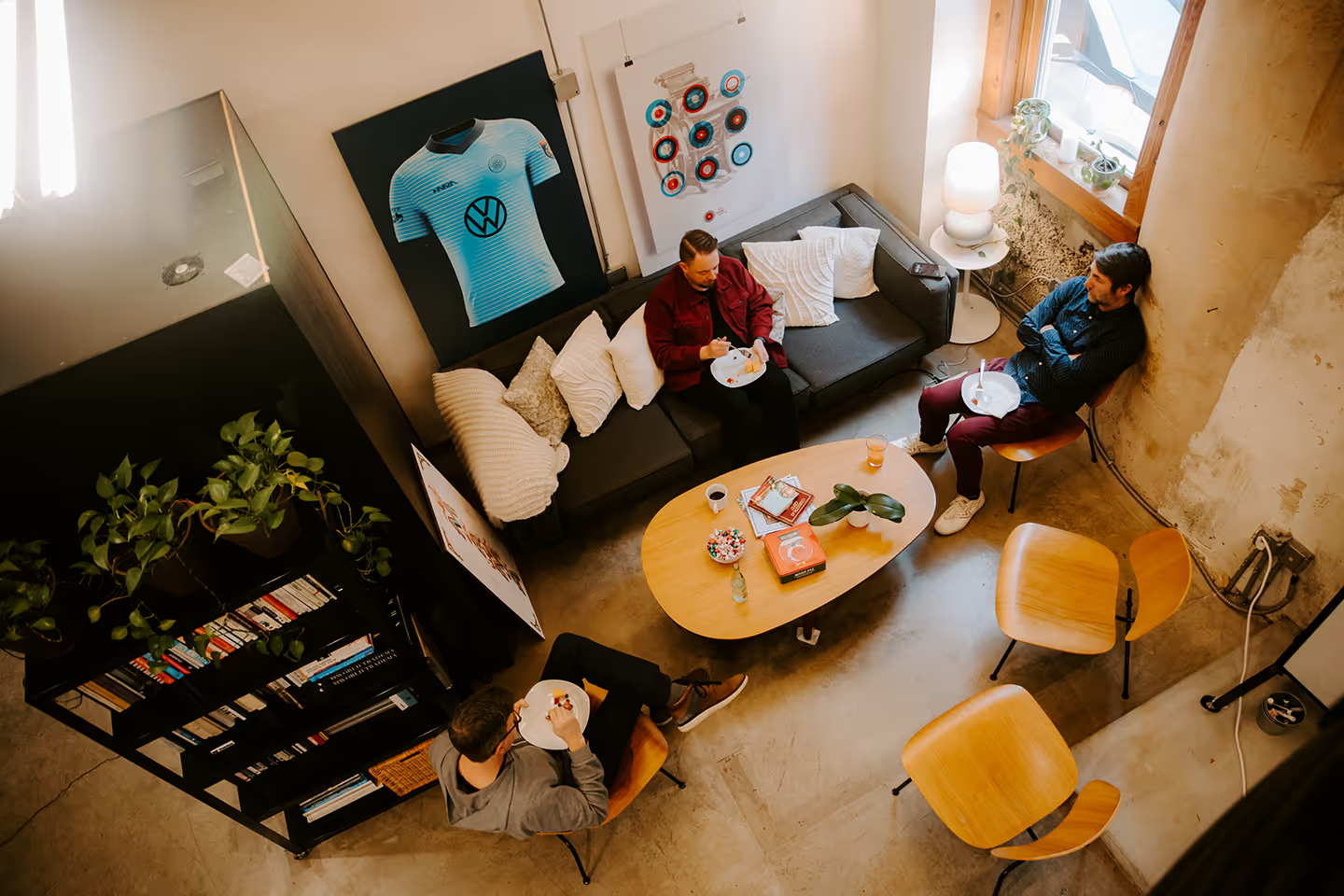
The most meaningful moments in life do not occur in comment sections. They happen around tables, in classrooms, in clinics, in sanctuaries, in neighborhoods, in boardrooms where real decisions shape real lives. They happen when parents listen to children, when friends reconcile, when teams build something together in shared space.
No technology can substitute for presence. Artificial intelligence can generate language, but it cannot feel responsibility. Algorithms can predict preferences, but they cannot love a neighbor. Platforms can amplify a voice, but they cannot replace the trust formed when two people look each other in the eye.
That is the possibility inside our irony.
Digital work does not have to compete with embodied life. It can serve it. It can remove friction from meaningful action. It can clarify vision so leaders act with courage. It can mobilize communities toward real-world outcomes. It can strengthen institutions that heal, educate, and restore.
If attention shapes who we become, then designing for attention is a moral act. The question is not whether technology will form people. The question is how.
We design digital systems that prioritize the world in front of us. We create brands that point beyond themselves. We use technology as an infrastructure for human connection rather than as a substitute for it. We measure success not only by growth or reach, but by whether our work strengthens what is irreducibly human.
The world in front of us still matters. It always has. It always will.
The challenge of this decade is not to abandon technology, but to order it toward what is real. That is the work. That is the responsibility. And that is the possibility we are choosing to pursue.